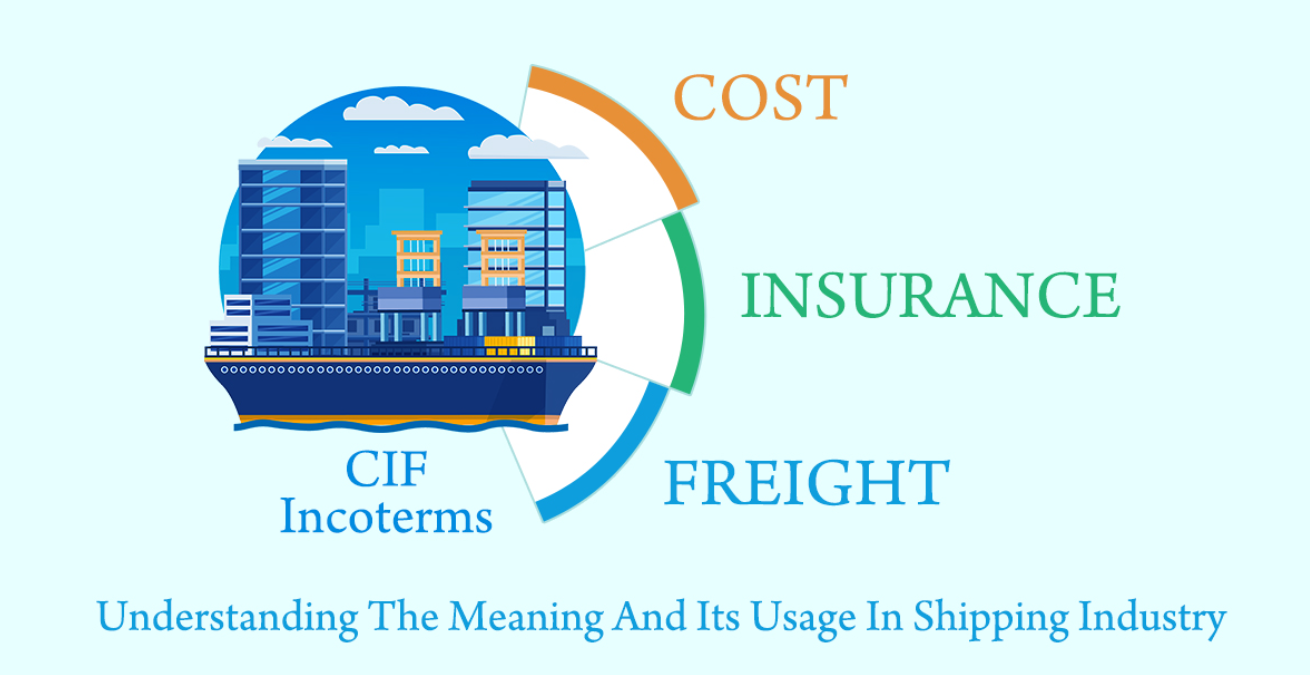
CIF is an Incoterm that stands for Cost, Insurance, and Freight. Under this agreement, the seller assumes responsibility for all three components. In international transactions, the seller manages the export process and shipping arrangements up to the destination port, including insuring the cargo throughout the voyage.
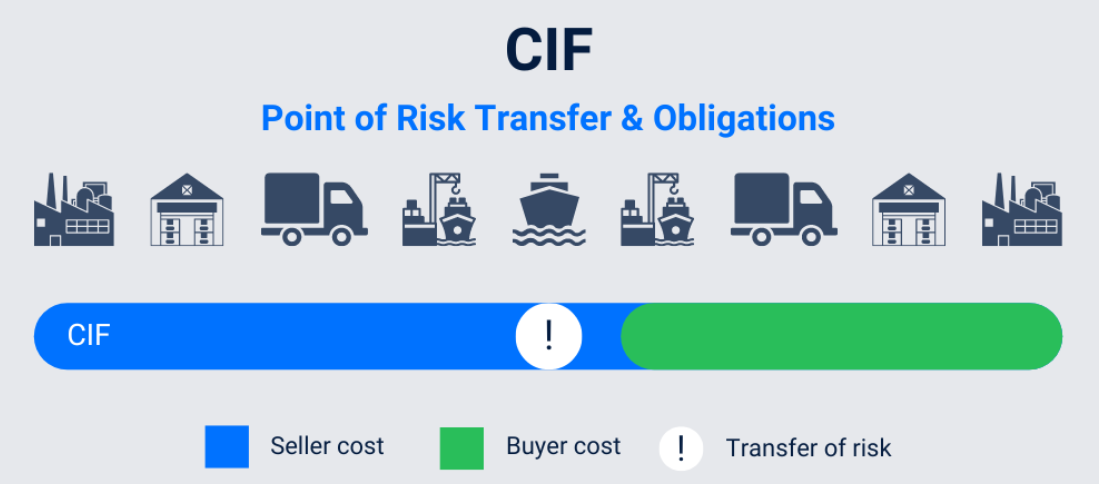
When shipping under CIF terms, the transfer of risk occurs once the goods are safely loaded onto the vessel. However, the seller remains responsible for covering freight charges and procuring shipping insurance. This means the seller bears all costs related to transporting the cargo until it arrives at the destination port. The buyer, in turn, takes over the import process—managing customs clearance and covering expenses for moving the goods to their final destination.
It’s important to note that CIF applies exclusively to sea or inland waterway shipments. While commonly used for full container loads (FCL), it can also be applied to less-than-container loads (LCL).
Let’s break down the specific obligations of both parties in a CIF agreement.
When a seller offers CIF terms, they commit to managing the export and shipping process until the goods are loaded onto the vessel. From that point, the buyer assumes responsibility for the shipment, including import procedures and final delivery.
The seller’s duties extend well beyond simply placing the cargo on a ship. They include:
· Export Packaging: Ensuring the goods are properly packed and labeled according to export standards, including any markings required by the exporting country.
· Loading Charges: Covering all costs related to loading the goods onto the initial carrier from the seller’s premises.
· Delivery to Port: Arranging and paying for transportation from the seller’s warehouse to the port of loading.
· Export Duties, Taxes, and Customs Clearance: Handling all export formalities, including customs fees, duties, and any examinations. The seller bears the cost of any additional fees arising from customs inspections.
· Origin Terminal Charges: Paying handling fees at the loading port.
· Loading onto Vessel: Covering expenses associated with loading the cargo onto the ship.
· Carriage Charges: Paying for sea freight from the port of loading to the port of destination.
· Insurance: Procuring and paying for an insurance policy to cover the shipment until it reaches the destination port.
Once the goods are loaded onto the vessel, risk and responsibility transfer to the buyer. The buyer’s obligations include:
· Destination Terminal Charges: Covering handling fees at the destination port, also known as Destination Handling Charges (DTHC).
· Delivery to Final Destination: Arranging and paying for transportation from the port to the final delivery address.
· Unloading at Destination: Covering any costs related to unloading the goods upon arrival.
· Import Duties, Taxes, and Customs Clearance: Managing all import requirements, including customs clearance, duties, and taxes. The buyer is also responsible for resolving any issues that arise during import, such as customs examinations.
· The seller covers all transportation and export costs in the country of origin. This is especially beneficial for buyers unfamiliar with the origin country or lacking local contacts, as it minimizes the buyer’s initial risk and logistical burden.
· CIF requires the seller to ensure the goods meet export requirements. This is particularly useful for shipping restricted or hazardous items, or when sourcing from countries with complex or poorly documented regulations.
· Insurance provided by the seller can help mitigate losses in case of issues during transit, such as piracy, adverse weather, or other named perils.
· Buyers with established relationships with third-party logistics providers (3PLs) for import and domestic shipping can leverage these resources without needing to source new partners in the origin country.
· The buyer assumes all risk once the goods are loaded onto the vessel. Any issues during transit become the buyer’s responsibility.
· Import duties and taxes are calculated not only on the product cost but also on the freight and insurance charges, which are included in the shipment’s declared value. This can lead to higher import costs.
· A common pitfall is misunderstanding the scope of CIF. Some suppliers may describe it as “free shipping,” leading buyers to assume door-to-door delivery. In reality, CIF only covers delivery to the destination port. Unaware buyers may face unexpected costs and logistical challenges when retrieving their goods from the port.
· Buyers relying on the seller to manage shipping may encounter inflated costs, as sellers might prioritize lower-cost carriers or include hidden commissions.
· Sellers often opt for the most economical shipping methods, which can result in longer transit times and potential delays.
· Destination handling charges (DTHC) may be inflated by carriers, as buyers have little recourse to avoid these fees.
· In case of cargo damage, insurance claims can be complicated. Since the seller is often the policy’s beneficiary, buyers may struggle to recover losses, especially if payment has already been made to the seller.
· Sellers may lack knowledge of specific import requirements, such as the U.S. Importer Security Filing (ISF). Neglecting such obligations can result in significant fines for the buyer—for example, a $5,000 penalty from U.S. Customs and Border Protection for ISF non-compliance.
· CIF should only be used for sea or inland waterway shipments.
· It can be a suitable option for buyers new to importing, as it allows them to focus on understanding the import process without managing export logistics.
· However, buyers should be aware that CIF often comes at a higher overall cost compared to arranging shipping independently with the help of a dedicated freight forwarder. For cost-effective and efficient shipping, working directly with a freight forwarder is generally recommended.

Copyright © C&C GLOBAL Logistics Co., Limited All Rights Reserved - Privacy Policy - Blog
 EN
EN
