FCA is an Incoterm that stands for Free Carrier. Under this agreement, the seller’s responsibility is to deliver the goods to a designated “Named Place”—typically a port or terminal—and handle all export-related procedures. Once the cargo is ready to be loaded onto the carrier, responsibility and risk transfer to the buyer.
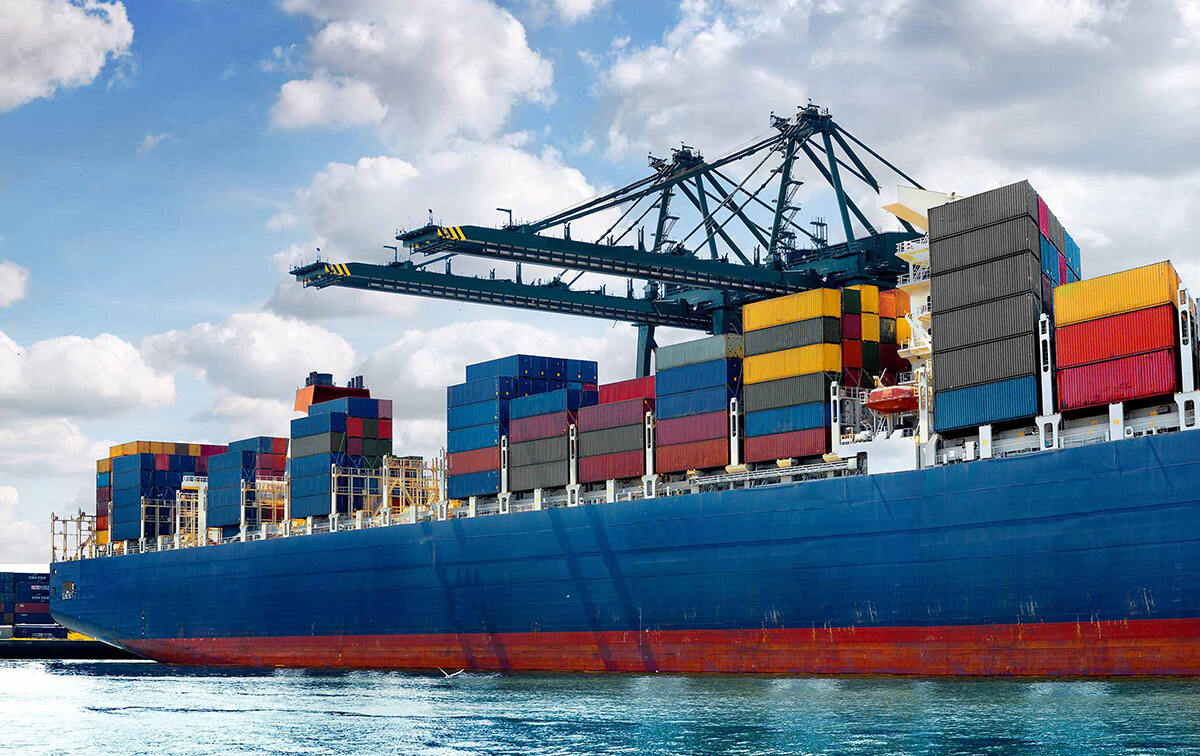
FCA can be used for any mode of transport, including air, sea, road, and rail. This term offers buyers greater flexibility, as they can arrange the main carriage themselves—often at more competitive rates than those offered by the seller. While the buyer assumes all risks and costs after the goods are delivered to the Named Place, FCA allows the buyer to take control after export clearance, which can be particularly beneficial for certain types of shipments.
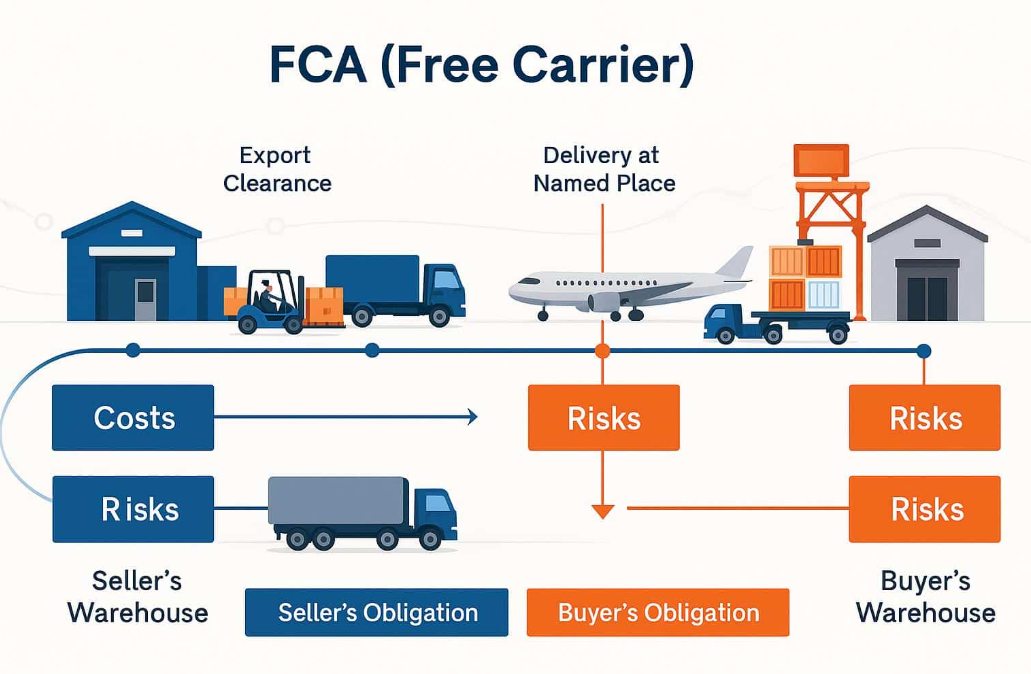
Under FCA terms, the seller is responsible for the complete export process. Their obligations include:
· Export Packaging: Ensuring the goods are packaged and labeled according to export regulations, which may include specific markings or packaging standards required by the origin country.
· Loading Charges: Covering costs associated with loading the goods onto the first carrier for transport to the Named Place.
· Delivery to Port/Named Place: Arranging and paying for transportation from the seller’s premises to the agreed-upon location (e.g., seaport, airport, or rail terminal).
· Export Duties, Taxes, and Customs Clearance: Handling all export formalities, including customs declarations, duties, taxes, and any required inspections or special clearances.
Once these responsibilities are fulfilled and the goods are delivered to the Named Place, risk and responsibility transfer to the buyer. Any request by the seller for reimbursement of these costs would constitute a breach of the FCA agreement.
From the point the goods are delivered to the Named Place, the buyer assumes all risks and costs, including:
· Origin Terminal Charges: Fees related to handling at the shipping terminal where the goods are loaded onto the main carrier.
· Loading onto Carriage: Charges for loading the goods onto the vessel or transport vehicle.
· Carriage Charges: Freight costs from the origin port to the destination port.
· Insurance: While not mandatory, the buyer may choose to obtain insurance for the transit phase.
· Destination Terminal Charges: Costs for unloading, handling, and storing the goods at the destination terminal.
· Delivery to Final Destination: Transporting the goods from the destination port to the final delivery address.
· Unloading at Destination: Expenses related to unloading the goods upon arrival.
· Import Duties, Taxes, and Customs Clearance: All import-related formalities, including duties, taxes, and compliance with customs regulations. The buyer is also responsible for resolving any issues that arise during import.
· Compared to EXW (Ex Works), where the buyer bears full risk from the seller’s doorstep, FCA offers more balance by placing export responsibilities on the seller.
· FCA gives the buyer greater control over the main carriage and logistics after export, enabling them to optimize costs and service levels.
· For buyers with reliable third-party logistics partners or freight forwarders, FCA allows them to leverage these relationships for better pricing and end-to-end shipping solutions.
· Buyers can often secure more competitive freight rates than those offered by the seller, especially when they have established shipping partnerships.
· FCA is less common than FOB for ocean shipments, as it requires the buyer to manage terminal and loading costs at the origin—which can complicate issue resolution if problems arise in the seller’s country.
· The International Chamber of Commerce recommends FCA mainly for containerized shipments. If the Named Place is not the terminal (e.g., a forwarder’s warehouse), the buyer may also be responsible for export formalities, making FCA similar to EXW in practice.
· In some markets, such as China, sellers are more accustomed to FOB terms. Using FCA may lead to confusion or inefficiency if the seller is unfamiliar with the process.
· If the buyer lacks experience or local support in the seller’s country, managing post-export logistics under FCA can become challenging and risky.
FCA is a viable option under the following conditions:
1. The shipment is containerized.
2. The buyer has logistics expertise or reliable support in the seller’s country.
3. The seller is comfortable with FCA and prefers it over FAS or FOB.
4. The goods are delivered directly to the terminal for export—not to an intermediate warehouse.
If these criteria are met, FCA can be an efficient and cost-effective Incoterm.
In general, FCA is not the most ideal choice for importing from China unless the above conditions are fully satisfied. Chinese suppliers are highly experienced and efficient under FOB terms, which are widely accepted and smoothly executed across the industry.
Unless there is a compelling reason to avoid FOB, it is often better to align with the local norm to prevent delays or misunderstandings.
If you are considering FCA for a China shipment, we recommend:
· Confirming with the factory whether they are comfortable quoting under FCA.
· Consulting a China-based freight forwarder or 3PL to compare the total costs and responsibilities under FCA versus FOB.
Regardless of the Incoterm chosen, investing in China freight insurance is always a prudent measure to protect against potential loss or supply chain disruption.

Copyright © C&C GLOBAL Logistics Co., Limited All Rights Reserved - Privacy Policy - Blog
 EN
EN
