EX Works (EXW) is an Incoterm that places maximum risk and responsibility on the buyer. Under this agreement, the seller is only required to make the goods available at their own premises, such as a warehouse or dock. Once the buyer collects the cargo, they assume all further responsibilities—including transportation to the final destination port.
EXW can be used for any mode of transport and applies across all stages of shipment. The seller’s obligation ends once the goods are packed in export-ready packaging and made available for collection. From that point onward, the buyer is responsible for arranging all transportation, preparing export documentation, covering freight charges, and managing import clearance and final delivery. Risk transfers to the buyer as soon as the goods are collected from the seller’s location.
Because EXW places full liability on the buyer, it is generally advised that inexperienced buyers or those unfamiliar with export procedures engage a freight and logistics company to help avoid errors and unplanned costs.
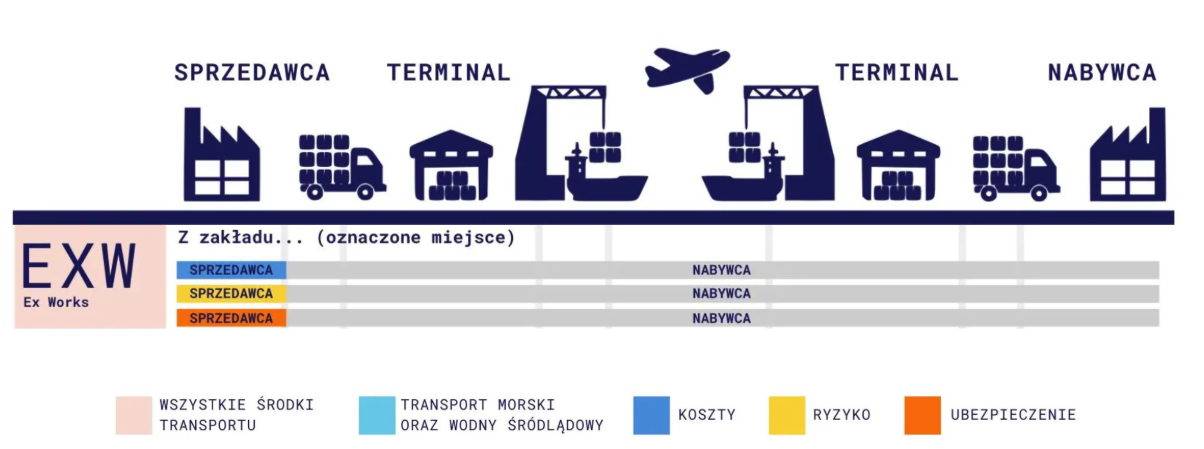
Below is a breakdown of the responsibilities for each party in an EXW shipment.
Seller’s Responsibilities
Under EXW, the seller’s duties are minimal. They must:
· Ensure the goods are packed appropriately for export.
· Have the cargo ready and accessible for the buyer to collect from their specified location.
These are the seller’s only core obligations.
The buyer takes on all risks and costs from the moment the goods are collected. Key responsibilities include:
· Loading Charges: Loading the goods onto the transport vehicle at the pickup point.
· Delivery to Port/Place: Transporting the cargo to the origin port to begin export.
· Export Documentation, Duties, and Taxes: Handling all export formalities, including customs clearance and payment of any export duties.
· Origin Terminal Charges: Covering all fees at the origin terminal.
· Loading onto Carriage: Loading the goods onto the main transport vessel or vehicle.
· Carriage Charges: Paying all freight costs from origin to destination port.
· Insurance: While not mandatory, arranging insurance to cover potential damage, theft, or loss is highly recommended.
· Destination Terminal Charges: Paying fees at the destination port for unloading and handling.
· Delivery to Final Destination: Arranging and funding transport from the destination port to the final delivery address.
· Unloading at Destination: Covering costs for unloading goods at their final stop.
· Import Duties, Taxes, and Clearance: Managing all import customs formalities and related payments.
Advantages
In certain scenarios, EXW can be a practical shipping solution:
· Consolidation of Shipments: If a buyer sources from multiple suppliers in one country, EXW allows them to consolidate goods into a single export shipment.
· Supplier Confidentiality: Buyers can use a different exporter name on shipping documents, helping protect supplier identity.
· Lower Unit Cost: EXW often comes with a lower product price since the seller’s responsibilities—and costs—are minimal. In some cases, if the seller relies on export tax refunds, FOB might be cheaper, but generally EXW offers cost savings.
· Access to Domestic-Only Suppliers: Some manufacturers only sell domestically. EXW enables international buyers to purchase from these suppliers and handle export independently.
However, due to the high level of risk, we recommend that buyers work with a trusted logistics partner when using EXW.
Despite potential cost benefits, EXW carries significant disadvantages for the buyer:
· Total Responsibility: The buyer bears all risks and costs related to export, transport, and import. Most other Incoterms distribute these responsibilities more evenly.
· Complexity in Export Procedures: Tasks like loading, inland transport, and export clearance—though not inherently high-risk—must be managed in the seller’s country. If issues arise (e.g., export restrictions), the buyer is liable since they already took possession.
· Unforeseen Costs: Buyers unfamiliar with export processes may encounter unexpected expenses, making EXW more expensive than initially anticipated.
If your supplier only offers EXW, it’s advisable to partner with a third-party logistics provider or freight forwarder who can manage export procedures on your behalf. Ensure they have the necessary export licenses and expertise.
EXW is typically used in the following situations:
· The seller cannot or will not handle export formalities.
· The buyer wants to combine multiple shipments under a single export.
· When shipping via air express services (e.g., DHL, FedEx), which often include export handling in their service—making EXW a convenient and sometimes cheaper option.
· Established importers with a local office in the export country may use EXW for greater control.
That said, unless there is a clear advantage, experienced sellers in international trade often prefer quoting under other Incoterms.
When importing from China, EXW can be a viable option for air express shipments.
It is also commonly used when buyers purchase directly from markets like Yiwu, where sellers typically quote EXW and expect the buyer to manage pickup and export.
While EXW may appear cheaper due to lower unit prices, buyers must account for inland transport and export costs. After factoring in these extras, the total cost may be similar to—or even exceed—that of FOB shipments.
The key benefit of EXW is full visibility and control over logistics costs—but only if you know what you're doing.
As a leading China freight forwarder, we specialize in managing EXW shipments on behalf of our clients, ensuring a smooth and compliant process.
Finally, regardless of the Incoterm used, we strongly recommend purchasing freight insurance for shipments from China. It is an affordable way to reduce risk and protect your supply chain from significant loss.

Copyright © C&C GLOBAL Logistics Co., Limited All Rights Reserved - Privacy Policy - Blog
 EN
EN
